
How Danes Really Furnish Their Homes
There’s a particular feeling you get when you step into a Danish home. It’s warm, calm, and quietly intentional. A space that feels lived‑in without ever feeling cluttered. But what makes it so cosy?
Natural light, white walls, and furniture that deserves to stand out
There’s a particular feeling you get when you step into a Danish home. It’s warm, calm, and quietly intentional. A space that feels lived‑in without ever feeling cluttered. But what makes it so cosy?
Light is the first ingredient of Danish comfort
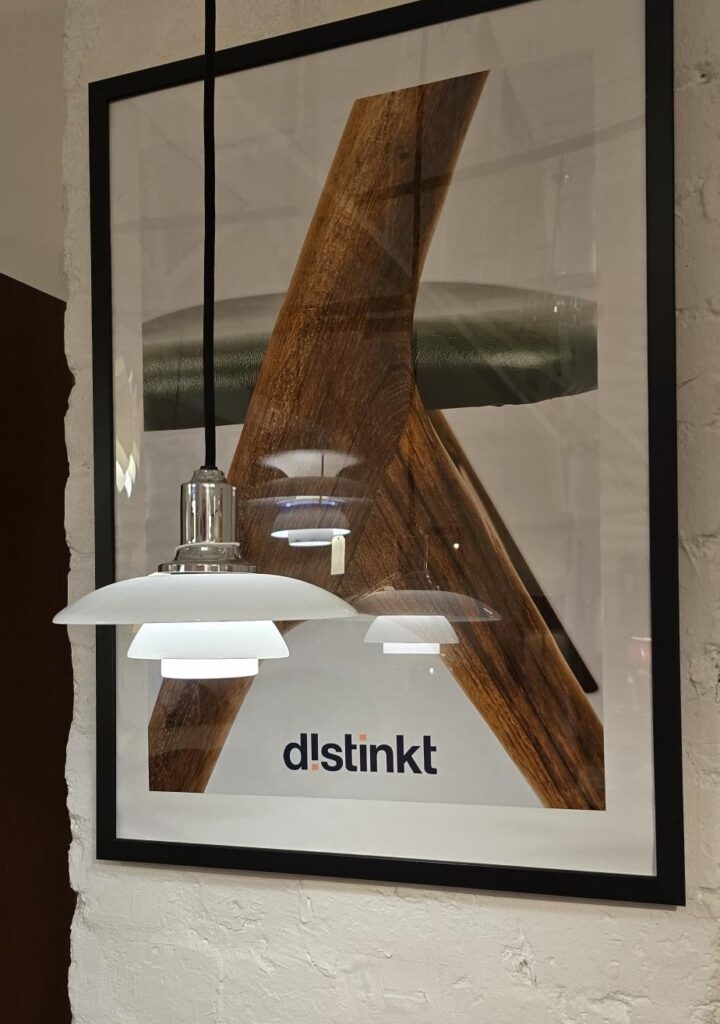
Denmark spends much of the year in low light, so we’ve learned to treat lighting as a design element. We use natural light whenever possible, letting it fall softly through curtains or across the walls. When the sun disappears, we rely on warm, gentle lighting without the glare from the light bulb. Usually with soft tones, and pockets of illumination that make a room feel intimate rather than exposed.
It’s never about brightness. It’s about warmth

Why Danish walls are almost always white
To outsiders, white walls might seem sterile or unimaginative. But in Denmark, they serve a quiet purpose. White walls act as a neutral backdrop, allowing the things that matter such as art, posters, ceramics, bookshelves, sculptural furniture, to stand out rather than compete.
Colour can be beautiful, but too much of it on the walls can overpower the pieces you want people to notice. A white wall lets a Wegner chair, a Mogensen bookcase, or a bold graphic print breathe. It creates visual calm, making the home feel spacious, warm, and balanced.
In Danish design, the walls are not the main event. They’re the stage.

Natural materials that bring warmth and texture
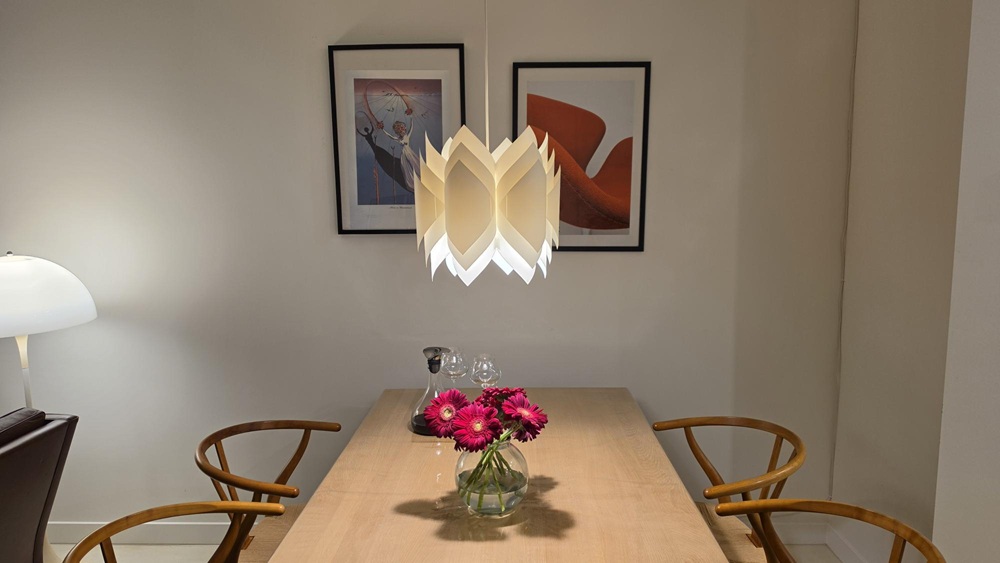
Danish interiors rely on natural materials because they age beautifully and feel good to live with. Solid wood, leather, wool, paper shades, ceramics — these soften a room, absorb light, and create a sense of ease that synthetic materials rarely achieve.
This is why mid‑century Danish furniture still resonates. Designers like Ole Wanscher, Børge Mogensen, and Hans J. Wegner worked from a simple idea: beauty should feel natural, not forced.
Bringing Danish warmth into Australian homes
A Danish home isn’t a showroom. It’s a place to sit, talk, read, cook, and gather. Furniture is arranged to support conversation.
At distinkt, we curate original Danish mid‑century furniture because these pieces naturally create that sense of warmth and ease. They’re sculptural without being showy, functional without being cold, and timeless without being nostalgic.
If you want to bring a more Danish feeling into your home, start with:
- Warm, soft lighting
- Natural materials
- White walls as backdrop
- Furniture designed and arranged for conversation
The rest follows naturally…